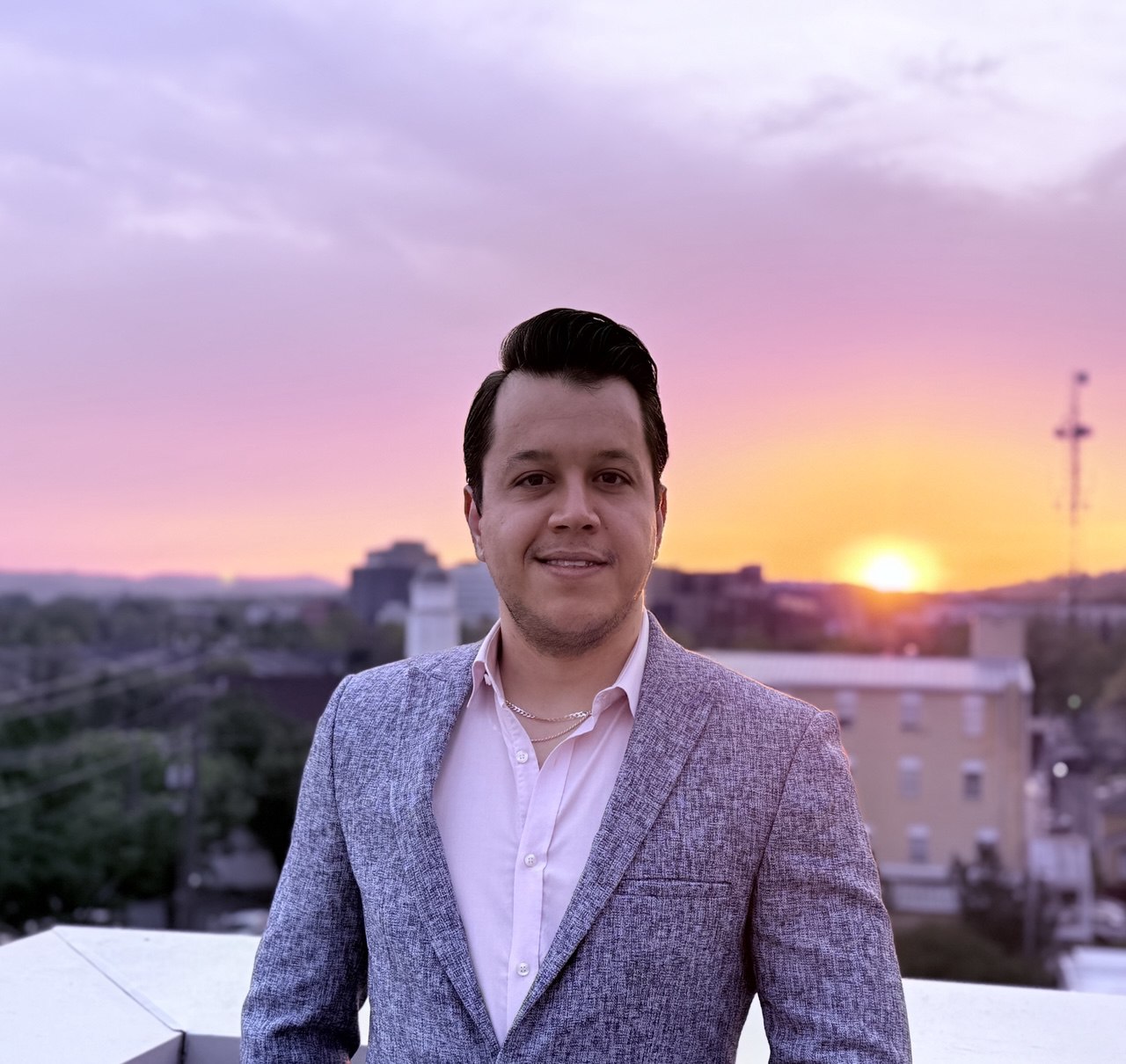
About
I am a Postdoctoral Research Associate at the University of Virginia Environmental Institute with a joint research appointment spanning computer science and civil and environmental engineering. I build machine learning systems for complex physical and infrastructure problems, with a current emphasis on digital twins, scientific machine learning, generative and uncertainty-aware AI, and trustworthy decision-making for cyber-physical systems.
Current Postdoctoral Research
My current postdoctoral agenda centers on generative, uncertainty-aware, and constraint-aware AI for infrastructure operations. The main themes are:
- Closed-loop stormwater digital twins that combine uncertainty-aware flood-state reconstruction with projected diffusion policies for constrained real-time control
- Inference-driven flood sensing that couples Bayesian inversion with value-of-information sensor network design under outages, sparse observations, and heterogeneous sensing modalities
- Constraint-aware generative optimization for power systems, including diffusion-based and differentiable optimization methods for stochastic optimal load shedding and resilient planning
- Neural-operator and graph-learning methods for flood forecasting, uncertainty quantification, and infrastructure intelligence across power, water, transportation, and structural systems
These directions build on prior work at the intersection of graph neural networks, neural operators, physics-informed learning, multi-fidelity modeling, and decision-making under uncertainty. Representative published work includes FloodForecaster, a domain-adaptive geometry-informed neural operator framework for transferable flood forecasting; HydroGraphNet, a physics-informed GNN integrated into NVIDIA PhysicsNeMo; multi-fidelity GNNs for mesh-based PDE and power-flow surrogate modeling; probabilistic frameworks for transportation resilience; and a multimodal safety analytics pipeline built on more than 15.6 billion connected-vehicle events.
What motivates me most is building models that are not only accurate, but also useful in operational settings. I focus on methods that reduce dependence on expensive simulations, respect physical laws, generalize across domains, and support time-sensitive decisions in high-stakes systems.
I am especially interested in Research Scientist, Applied Scientist, and Scientific ML / ML Engineer roles where rigorous modeling, scalable software, and real-world infrastructure impact come together.
Selected Highlights
- Authored 9 peer-reviewed publications and 2 under-review manuscripts spanning flood forecasting, transportation resilience, power systems, and scientific machine learning
- Developed multi-fidelity GNN frameworks that improve data efficiency for mesh-based PDE, flood, and power-system modeling
- Built FloodForecaster, a domain-adaptive geometry-informed neural operator framework for transferable flood forecasting on unstructured domains
- Created HydroGraphNet, an interpretable physics-informed GNN integrated into NVIDIA PhysicsNeMo
- Served as Lead Student Researcher on four funded projects across multimodal safety, cyberinfrastructure, uncertainty quantification, and transportation resilience
- Developed an active postdoctoral research agenda around flood inference, stormwater control, sensor design, and resilient power-system optimization
Explore More
- Visit the research page for case-study-style project summaries
- See the publications page for selected papers and research themes
- Review my CV for experience, awards, technical strengths, and contact details